Marie Callender’s Frozen Pies: A Comprehensive Cooking Guide (Updated 11/30/2025)
Marie Callender’s offers convenient, flavorful pies, though some perceive a processed taste; however, testing reveals quality crusts, rivaling Pillsbury, and consistently delivering on both flavor and texture.
Understanding Marie Callender’s Pie Varieties
Marie Callender’s distinguishes itself within the frozen pie landscape by offering a diverse selection, catering to a wide range of preferences. Beyond the classic apple and cherry, you’ll discover options like pecan, blueberry, chocolate cream, and seasonal fruit varieties.
The brand strategically balances traditional recipes with modern convenience. While some may initially perceive a “boxed” quality, comparative testing demonstrates that Marie Callender’s crusts hold up well against competitors like Pillsbury, offering a satisfying texture.
Understanding the nuances of each variety is key to optimal enjoyment. The fruit-forward pies benefit from pairings that complement their tartness, while cream pies shine with simple, elegant toppings. Ultimately, Marie Callender’s aims to deliver a consistently flavorful experience, even within the realm of frozen entrees, avoiding the typical “punishment” feeling often associated with convenience foods.
Popular Pie Flavors & Their Characteristics
Apple Pie, a cornerstone of Marie Callender’s lineup, boasts a classic cinnamon-spiced filling with tender, slightly tart apples. Cherry Pie offers a vibrant, sweet-tart flavor profile, often featuring a rich, ruby-red filling. Pecan Pie delivers a decadent experience, characterized by a buttery, nutty filling and a satisfyingly crunchy texture.
Blueberry Pie provides a burst of fresh berry flavor, balanced with a hint of sweetness. Chocolate Cream Pie is a smooth, creamy indulgence, perfect for chocolate lovers. Despite perceptions of processed taste, Marie Callender’s consistently delivers on texture, even when compared to brands like Pillsbury.
Each flavor benefits from proper baking, ensuring a flaky crust and a perfectly heated filling. While convenient, these frozen pies avoid the “punishment” feeling often associated with quick meals, offering a genuinely enjoyable dessert experience.
Decoding the Packaging: What the Label Tells You
Marie Callender’s packaging provides crucial information for optimal baking. The front prominently displays the pie flavor and size (standard 9-inch or deep dish). Look for the “Best By” date to ensure freshness, though these pies generally maintain quality for several months beyond this date when frozen.
The side panel details cooking instructions for both oven and microwave methods. Pay close attention to recommended oven temperatures and baking times, which vary based on pie size. The ingredient list is also present, useful for allergy considerations. While some may perceive a processed taste, the packaging assures a consistent product.
Understanding these details, alongside comparisons to brands like Pillsbury, helps achieve the best results. Remember, proper baking transforms a convenient frozen pie into a satisfying dessert, avoiding the “punishment” feeling of some frozen meals.
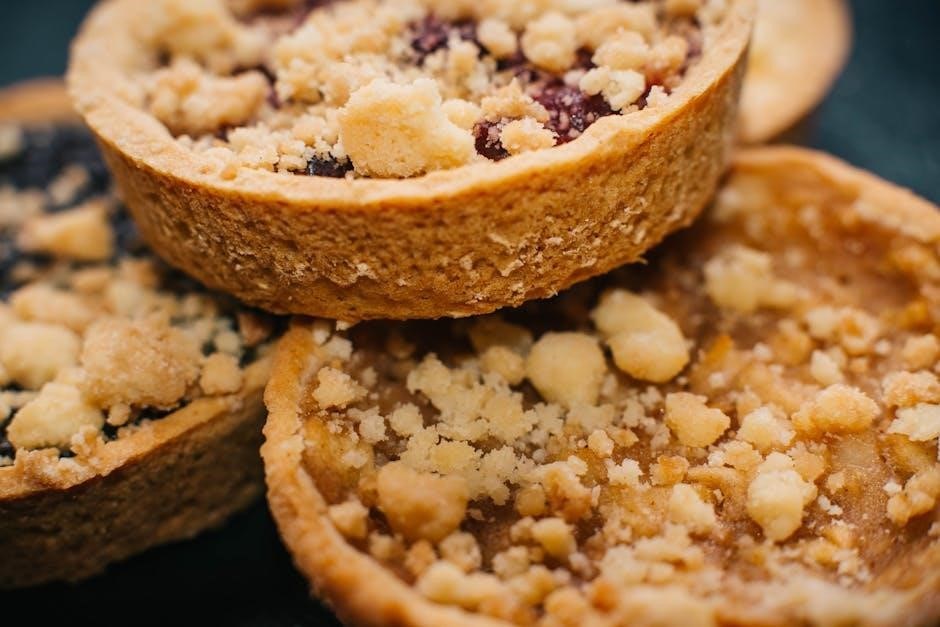
Oven Baking Instructions: The Preferred Method
Marie Callender’s packaging details oven baking, offering the best texture and flavor; it’s a reliable method, avoiding the potentially processed taste some associate with frozen meals.
Preheating Your Oven: Temperature & Time
Achieving a perfectly baked Marie Callender’s pie begins with proper oven preheating. Consistent temperature is crucial for even cooking and a golden-brown crust. Generally, preheat your oven to 375°F (190°C). Allow approximately 20-25 minutes for the oven to reach the desired temperature – using an oven thermometer is highly recommended for accuracy.
Insufficient preheating can lead to a soggy bottom crust and unevenly cooked filling. Conversely, excessively high temperatures may cause the crust to burn before the filling is heated through. Patience during this initial step significantly impacts the final result. Remember, a well-preheated oven is the foundation for a delicious, homemade-tasting pie, even when starting with a frozen option.
For optimal results, avoid opening the oven door frequently during preheating, as this can disrupt the temperature regulation process.
Preparing the Pie for Baking: Removing Packaging
Before placing your frozen Marie Callender’s pie in the oven, careful packaging removal is essential. Begin by removing the outer cardboard box. Beneath this, you’ll find a protective plastic wrap directly covering the pie. This wrap must be removed entirely to allow steam to escape during baking. Failure to do so can result in a soggy crust and potentially cause the packaging to melt or damage your oven.
Some pies may also have a foil seal under the plastic wrap; ensure this is also removed. Handle the pie gently to avoid damaging the crust. Avoid puncturing the crust during packaging removal. Place the unwrapped pie directly onto a baking sheet – this will catch any potential filling spills and simplify cleanup.
A clean baking sheet is recommended for optimal results.
Baking Times Based on Pie Size & Flavor
Baking times for Marie Callender’s frozen pies vary depending on the size and specific flavor. Generally, a standard 9-inch pie requires approximately 50-60 minutes of baking time. However, deep-dish pies necessitate a longer baking duration, typically ranging from 65-75 minutes, to ensure the filling is thoroughly heated and the crust is golden brown.
Flavor profiles can also influence baking time. Fruit pies, like apple or cherry, may require slightly less time than pecan or chocolate cream pies. Always refer to the specific instructions printed on the pie’s packaging, as these are tailored to that particular variety. Consistent oven temperature is crucial for even baking; avoid opening the oven door frequently during the process.
Monitoring the pie’s progress visually is key to achieving perfect results.
Standard Size Pies (9-inch) ⎼ Baking Duration
For Marie Callender’s standard 9-inch frozen pies, a baking duration of 50 to 60 minutes at 375°F (190°C) is generally recommended. Begin by preheating your oven to the correct temperature to ensure even cooking. Place the pie directly on the center rack, avoiding placement too close to the oven walls.
Initial baking for 30 minutes should be covered loosely with aluminum foil to prevent excessive browning of the crust. Remove the foil for the remaining 20-30 minutes to allow the crust to achieve a golden-brown color. Keep a close watch during the final stages to prevent burning.
Variations in oven performance may necessitate slight adjustments to the baking time. Always check for doneness using the visual cues and internal temperature guidelines provided elsewhere in this guide.
Deep Dish Pies ⎼ Adjusting Baking Time
Marie Callender’s deep dish pies require a longer baking time compared to their standard 9-inch counterparts due to their increased filling volume. A recommended baking duration is 65 to 80 minutes at 375°F (190°C). Initial baking, approximately 40-45 minutes, should be done with a loose covering of aluminum foil.
This prevents the crust from becoming overly browned before the filling is fully heated through. Remove the foil for the final 25-35 minutes to allow the crust to crisp and turn golden brown. Monitor closely during this stage, as deep dish pies are more prone to bubbling over.
Consistent oven temperature is crucial; consider using an oven thermometer for accuracy. Adjust baking time slightly based on your oven’s performance and always verify doneness with visual cues and internal temperature checks.
Checking for Doneness: Visual Cues & Internal Temperature
Determining when your Marie Callender’s pie is perfectly baked involves observing several key indicators. Visually, the crust should be a rich, golden brown color, and the filling should be bubbling, particularly around the edges. A slightly jiggly center is acceptable, as the filling will continue to set as it cools.
For a more precise assessment, use an instant-read thermometer. Insert it into the center of the filling, avoiding the crust. Fruit fillings generally reach doneness at 200-210°F (93-99°C). Ensure the filling is heated through and not lukewarm.
If the crust is browning too quickly, tent it loosely with aluminum foil during the final stages of baking. Remember, carryover cooking will continue after removing the pie from the oven, so avoid overbaking.
Microwave Cooking Instructions: For Quick Convenience
Marie Callender’s pies offer a speedy solution when time is limited; however, microwave results may differ from oven baking, impacting crust texture and overall quality.
Microwave Power Levels & Adjustments
Microwave cooking with Marie Callender’s frozen pies necessitates careful power level adjustments for optimal results. Unlike conventional oven baking, microwaves cook from the inside out, potentially leading to a soggy crust if not managed correctly. Generally, a power level of 50% to 70% is recommended, significantly lower than the standard 100% power used for reheating leftovers.
This reduced power allows the filling to heat through without excessively softening or burning the crust. However, microwave wattages vary considerably – a 700-watt microwave will require different settings than a 1200-watt model. It’s crucial to consult your microwave’s manual for specific power level guidance.
Begin with the lower end of the recommended range (50%) and incrementally increase the power if needed, checking frequently for doneness. Remember, it’s easier to add cooking time than to salvage an overcooked pie. Consistent monitoring is key to achieving a palatable outcome when utilizing microwave convenience.

Microwave Baking Times by Pie Flavor
Marie Callender’s microwave baking times vary depending on the pie flavor and size, requiring adjustments for optimal heating. Apple Pie, with its denser filling, typically requires 5-7 minutes on 50% power, followed by a 2-minute resting period. Cherry Pie, often having a slightly more liquid filling, generally needs 4-6 minutes on the same power setting, also with a 2-minute rest.
These times are estimates for standard 9-inch pies; deep-dish varieties will necessitate longer cooking durations – add approximately 2-3 minutes to the initial cooking time. Always check for internal temperature and filling consistency.
Rotating the pie halfway through the cooking process ensures even heating. Remember, microwave wattages differ, so these times serve as a starting point; adjust accordingly based on your appliance and desired level of warmth. Careful observation is crucial for a satisfying microwave experience.
Apple Pie ⎼ Microwave Instructions
Marie Callender’s frozen Apple Pie benefits from careful microwave application for a quick treat. Begin by placing the pie on a microwave-safe plate. For a standard 9-inch pie, set your microwave to 50% power and cook for 5-7 minutes. A lower power setting prevents the crust from becoming overly soggy or the filling from exploding.
Halfway through the cooking time, rotate the pie 180 degrees to promote even heating. After the initial cooking period, let the pie rest for 2 minutes inside the microwave. This allows the heat to distribute and finish cooking the filling.
Check the internal temperature; it should be warm throughout. If needed, add 30-second intervals until desired warmth is achieved. Deep-dish apple pies may require an additional 2-3 minutes of cooking time.
Cherry Pie ― Microwave Instructions
Marie Callender’s frozen Cherry Pie offers a swift dessert solution via microwave cooking, though attention to detail is key. Place the pie securely on a microwave-safe plate. Initiate cooking on 50% power for 4-6 minutes for a standard 9-inch pie. Reducing power prevents a soggy crust and minimizes filling overflow – a common microwave pitfall.
Rotate the pie halfway through the cooking cycle to ensure uniform heating. Following the initial cook time, allow the pie to stand, undisturbed, within the microwave for 2 minutes. This resting period facilitates complete heat distribution and finishing of the cherry filling.
Assess the internal temperature; it should be thoroughly warmed. If further heating is needed, proceed in 30-second increments until the desired temperature is reached. Deep-dish cherry pies may necessitate an extra 1-2 minutes.
Potential Issues with Microwave Cooking & Solutions
Microwave cooking, while convenient, presents unique challenges with Marie Callender’s pies. A frequently encountered issue is an unevenly heated pie, often resulting in a cold center. The solution? Utilize a lower power setting (50-70%) and rotate the pie midway through cooking. This promotes more consistent heat distribution.
Another common problem is a soggy bottom crust. To mitigate this, place the pie on a microwave-safe rack to elevate it and allow air circulation. Furthermore, avoid overcooking, as excessive heat exacerbates sogginess. Filling bubbling over is also possible; use a larger microwave-safe plate to contain any spillage.
If the filling isn’t adequately heated, continue microwaving in 30-second intervals, checking after each burst. Remember, standing time post-cooking is crucial for completing the heating process.
Tips for Enhancing Your Marie Callender’s Pie Experience
Enhance your pie with delightful pairings like vanilla ice cream or whipped cream! Preventing a soggy crust and proper reheating maintain quality and flavor.
Serving Suggestions: Pairings & Toppings
Marie Callender’s pies are wonderfully versatile and become even more special with thoughtful accompaniments. For a classic experience, a generous scoop of premium vanilla ice cream is an absolute must-have, creating a delightful contrast of temperatures and textures. Alternatively, a dollop of freshly whipped cream adds a light and airy sweetness that complements the pie’s filling beautifully.
Consider a drizzle of caramel sauce over apple or pecan pies for an extra layer of indulgence. A sprinkle of cinnamon or nutmeg can also enhance the warm, comforting flavors. For cherry pie, a touch of almond extract in the whipped cream elevates the experience. Don’t underestimate the simple pleasure of a warm beverage alongside your pie – a cup of coffee, tea, or even a glass of milk can complete the treat.
Experiment with different pairings to discover your personal favorites!
Preventing a Soggy Bottom Crust
Achieving a perfectly crisp bottom crust with a frozen pie requires a few simple techniques. Preheating your oven thoroughly is crucial; ensure it reaches the recommended temperature before placing the pie inside. Placing the pie on a preheated baking sheet further aids in even cooking and prevents sogginess. Consider using a pie shield or aluminum foil to protect the crust edges from over-browning, allowing the bottom to cook fully.
Avoid placing the pie directly on the oven rack, as this can trap moisture. A slightly higher oven rack position can also promote better bottom crust crispness. Some bakers recommend brushing the bottom crust with a lightly beaten egg white before adding the filling; this creates a barrier against moisture.
Finally, allowing the pie to cool completely on a wire rack after baking is essential for a firm, crisp crust.
Reheating Leftover Pie: Maintaining Quality
Reheating Marie Callender’s pie properly ensures it retains its delicious flavor and texture. The oven is the preferred method for maintaining quality. Preheat your oven to 350°F (175°C). Cover the pie loosely with aluminum foil to prevent excessive browning, especially on the crust;
Reheat for approximately 15-20 minutes, or until the filling is warmed through. Remove the foil during the last 5 minutes to crisp up the crust. Avoid microwaving, as it can result in a soggy crust. If microwaving is necessary for speed, use short bursts (30 seconds) on a lower power setting, checking frequently.
Allow the pie to rest for a few minutes before serving. Storing leftover pie in an airtight container in the refrigerator will help preserve its freshness.
Troubleshooting Common Baking Problems
Marie Callender’s pies may experience issues like rapid crust browning or filling overflow; careful temperature control and proper covering can mitigate these common baking challenges.
Crust Browning Too Quickly
A frequently encountered issue when baking Marie Callender’s frozen pies is a crust that browns too rapidly, while the filling remains underbaked. This often stems from oven temperature inconsistencies or the pie being positioned too close to the heating element.
To prevent this, consider several adjustments. First, verify your oven’s accuracy with an oven thermometer. If it runs hot, reduce the baking temperature by 25°F (approximately 15°C). Secondly, employ a pie shield or create one using aluminum foil, carefully covering the crust’s edges during the latter half of the baking process.
Another effective technique is to place the pie on a lower oven rack, further distancing it from direct heat. Regularly monitoring the pie’s progress is crucial; if browning accelerates, tent the entire pie loosely with foil. Remember, a golden-brown crust is desirable, but a burnt one compromises the overall flavor and texture.
Filling Bubbling Over
A common challenge when baking Marie Callender’s pies is dealing with filling that bubbles over during the baking process, creating a messy oven situation and potentially a burnt crust. This typically happens due to the fruit releasing juices as it heats, generating steam and expanding the filling’s volume.
To mitigate this, ensure the pie is placed on a baking sheet lined with parchment paper. This will catch any overflow, simplifying cleanup. Additionally, avoid overfilling the pie during preparation – though Marie Callender’s pies are pre-filled, slight variations can occur.
Consider gently scoring the top crust in a few places with a knife before baking; this allows steam to escape. If bubbling persists, loosely tent the pie with aluminum foil during the latter portion of baking. Monitoring closely and acting quickly will prevent a significant mess and ensure a beautifully baked pie.
Unevenly Baked Pie
An unevenly baked pie, with a burnt crust and a still-frozen center, is a frustrating outcome. This often stems from inconsistent oven temperatures or improper pie placement. Marie Callender’s pies, while convenient, require careful attention to baking conditions.
To address this, verify your oven’s accuracy with an oven thermometer. Rotate the pie halfway through the baking time to ensure even heat distribution. Avoid placing the pie directly against the oven walls, as this can lead to localized overheating.
If the crust browns too quickly, tent it loosely with aluminum foil. For a consistently baked pie, ensure the oven is preheated to the correct temperature and that the pie is baked on a center rack. Consistent monitoring and adjustments are key to achieving a perfectly baked Marie Callender’s pie.
Comparing Marie Callender’s to Other Frozen Pie Brands
Marie Callender’s consistently delivers flavor and texture, contrasting with some frozen brands; its crusts rival Pillsbury’s, offering a quality experience compared to store-baked options.
Marie Callender’s vs. Pillsbury Frozen Pies
Marie Callender’s and Pillsbury represent prominent players in the frozen pie market, each catering to distinct preferences. Testing indicates Pillsbury’s crust is remarkably easy to work with, achieving a nearly flawless appearance post-baking, suggesting a focus on user convenience and visual appeal. However, Marie Callender’s pies often prioritize a more “homestyle” flavor profile, aiming to replicate the taste of bakery-quality pies.
While Pillsbury excels in crust simplicity, Marie Callender’s frequently offers a wider variety of pie flavors and fillings, potentially appealing to those seeking diverse options. Some consumers perceive a slight “processed” taste in certain frozen options, but Marie Callender’s generally receives positive feedback regarding its flavor and texture consistency. Ultimately, the choice hinges on whether you prioritize ease of use and pristine aesthetics (Pillsbury) or a more robust, traditional pie experience (Marie Callender’s).
Marie Callender’s vs. Store-Baked Pies
Comparing Marie Callender’s frozen pies to those from a bakery reveals a trade-off between convenience and artisanal quality. Store-baked pies often boast freshly made crusts with superior flakiness and fillings crafted from whole, unprocessed ingredients, resulting in a more complex and nuanced flavor. However, this quality comes at a higher price point and requires a dedicated trip to the bakery.
Marie Callender’s provides a readily available, affordable alternative, particularly valuable when time is limited or a bakery isn’t accessible. While some perceive a slight “processed” quality, Marie Callender’s consistently delivers on flavor and texture, offering a satisfying pie experience without the extensive preparation. For Thanksgiving, or any occasion, choosing Marie Callender’s is a wise decision if you lack the time or talent for scratch baking, as advised by culinary experts.